
Supreme Court on exclusion of Related Party from the Committee of Creditors under the Insolvency and Bankruptcy Code
On October 27, 2026, the Court passed the order in Civil Appeal No. 6268 of 2022, settling a crucial dispute regarding the Insolvency and Bankruptcy Code. The judgment provides absolute clarity on the definition of a related party and their subsequent exclusion from the Committee of Creditors. The case involved ECL Finance Limited acting as […]
Arbitral Tribunal Composition and Section 29A Extension Under the Arbitration and Conciliation Act: Supreme Court clarifies
In a significant legal development, the Supreme Court of India resolved complex procedural conflicts concerning arbitration agreements and insolvency. On October 28, 2026, the Court passed the order in Civil Appeal No. 9313 of 2026, which arose out of Special Leave Petition (Civil) No. 27403 of 2023, along with a connected appeal. The dispute involved […]
Supreme Court Upholds Binding Nature of Resolution Plans under IBC in Bank of India vs. S.M. Kamal Pasha
The Insolvency and Bankruptcy Code framework continues to face legal scrutiny regarding whether financial creditors can alter their stance after approving a rescue package. In a landmark ruling, the Supreme Court addressed whether a Committee of Creditors can seek the withdrawal of a resolution plan solely because the corporate debtor’s financial position improved during prolonged […]
Impact of the MCA Exemption on IBC Moratorium for Cape Town Convention related to Aircrafts and other assets: Resolving the Go First Insolvency Crisis
The intersection of domestic insolvency laws and international aviation treaties recently took center stage during the corporate insolvency resolution process of Go Airlines (India) Limited. When the airline filed for voluntary insolvency, the National Company Law Tribunal admitted the plea on May 10, 2023, triggering a strict moratorium under Section 14 of the Insolvency and […]
Reverse corporate insolvency -Supreme Court Upholds Project-Wise Insolvency: Relief for Homebuyers Under Section 7 IBC
Supreme Court of India delivered a crucial order balancing corporate creditor rights with the welfare of thousands of flat purchasers. The ruling addresses the legality of reverse corporate insolvency resolution and project-specific insolvency under the Insolvency and Bankruptcy Code, 2016. Background of the Dispute The dispute originated when the National Company Law Tribunal admitted an […]
Supreme Court Mandates Strict 60 Day Deadline for IBC Appeals
The Supreme Court passed the order in Civil Appeal No. 7882 of 2023, addressing a critical question regarding the computation of limitation periods under the Insolvency and Bankruptcy Code, 2016. The judgment clarifies the exact point for the limitation clock when an aggrieved party seeks to challenge an order from the National Company Law Appellate […]
Supreme Court clarifies threshold for admitting Section 7 IBC Applications.
The landscape of corporate insolvency in India requires strict adherence to statutory timelines and evidentiary standards to ensure the swift resolution of stressed assets. In a definitive ruling, the Supreme Court addressed the evidentiary threshold for admitting insolvency petitions and the legal weight of Information Utility records. The Court passed the order on October 15, […]
Are Lease Rentals During CIRP Considered as CIRP Cost? Analysis of NCLAT Ruling.
The treatment of lease rental dues during the Corporate Insolvency Resolution Process (CIRP) has been a highly debated issue under the Insolvency and Bankruptcy Code. A common question that arises is whether the rent payable for properties leased by a corporate debtor during the CIRP period qualifies as a CIRP cost. A leading judgment by […]
Why India needs a predictable Cross Border Insolvency regime.

India is finally moving toward a formal framework for cross-border insolvency. The Insolvency and Bankruptcy Code (Amendment) Bill, 2025, expected in the second half of the Budget Session, in March, signals a shift from today’s ad-hoc, territorial approach to a universalist model aligned with global standards. The current system leaves multinational restructurings in uncertainty: • […]
IBC: Unlocking Personal Assets? The promoters dilemma.
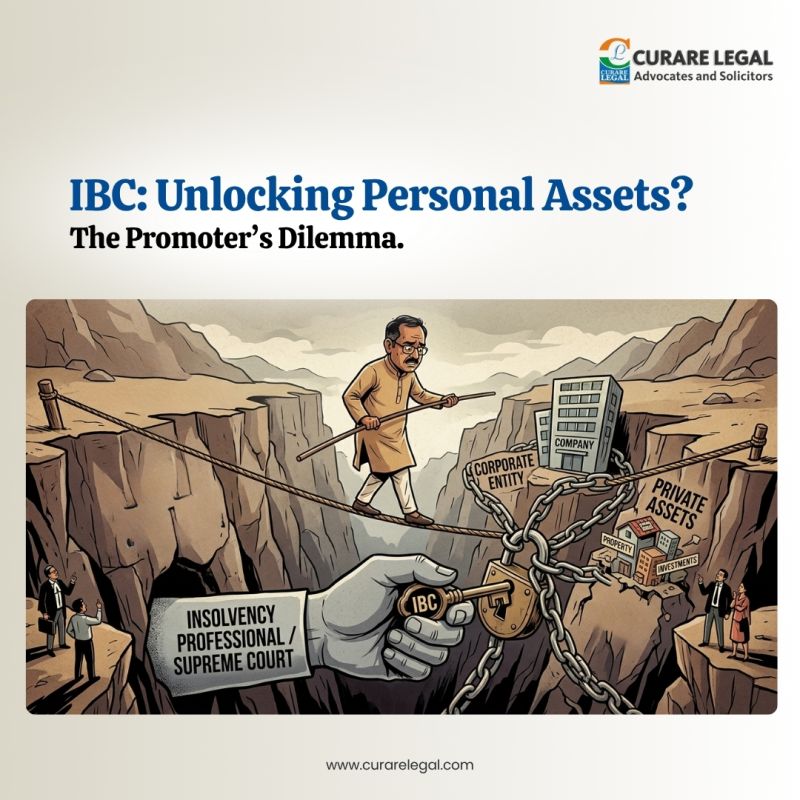
For years, many Indian promoters viewed the “corporate veil” as a tough topic. A personal guarantee was just a standard “box to check” to get bank loans approved. But if you are a founder or an HNI, it is time to realize the legal ground has shifted dramatically. Since the Supreme Court ruling in Lalit […]